

Alumni Highlight: Kristen Vale
By Debbie Bush, Web Assistant
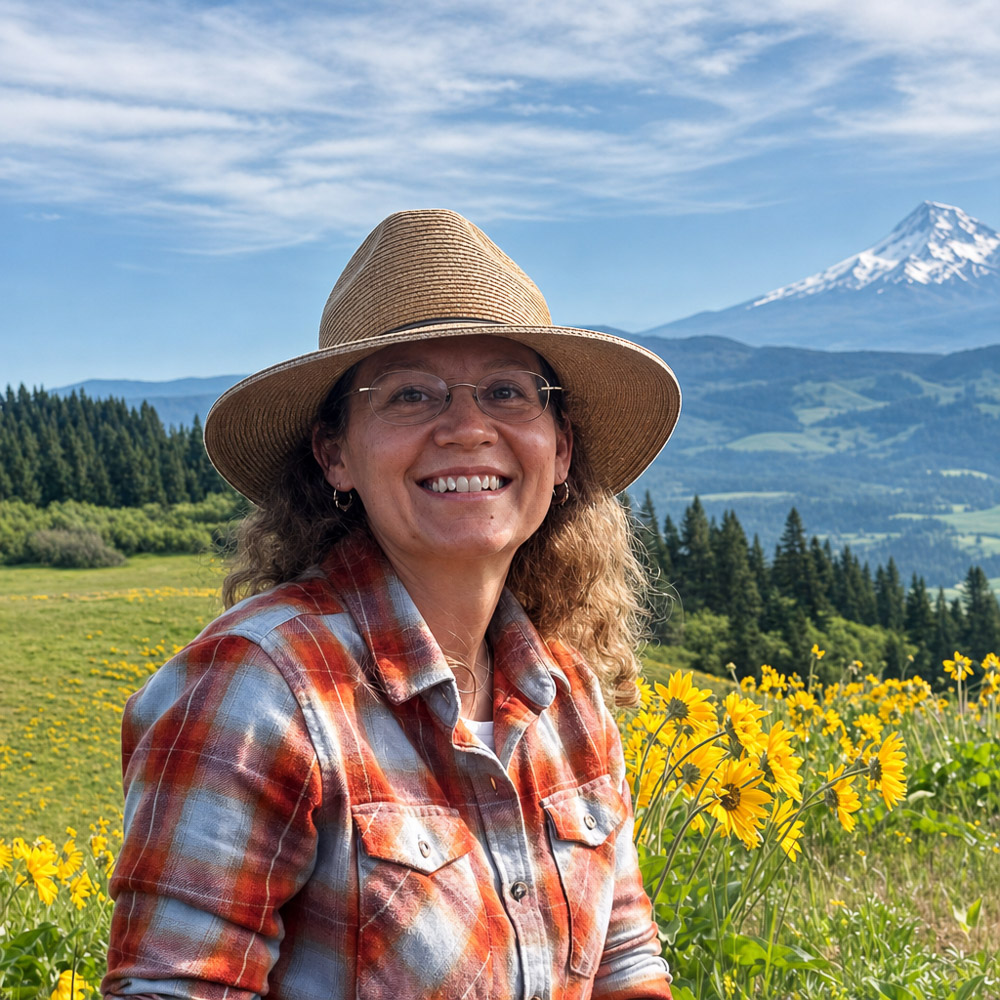
A passion for birds that began in an undergraduate classroom grew into a career in conservation for UHCL alumna Kristen Vale. Through her work at the Environmental Institute of Houston and beyond, she has built a path from coastal field research to her current role as a wildlife biologist—reflecting the significant impact UHCL graduates are making in the field.
What drew you to environmental science and coastal bird conservation?
When I moved to the coast and started working for the Environmental Institute of Houston (EIH), we saw birds of different sizes, shapes, and colors at the monitoring sites we visited. At first, I was fascinated by their appearance, but I soon began learning about their ecology and the challenges they face as coastal development impacts their habitats. I knew this was the right path for me to follow.
How did your time at the Environmental Institute of Houston help prepare you for your career?
It taught me everything. The projects we worked on were incredibly diverse—different habitats and target species, field sampling techniques, tools and equipment, and research questions. Each project felt like its own job, and we were doing something different every day. I quickly built up my resume and confidence in my professional abilities.
What was the most memorable moment from your field research?
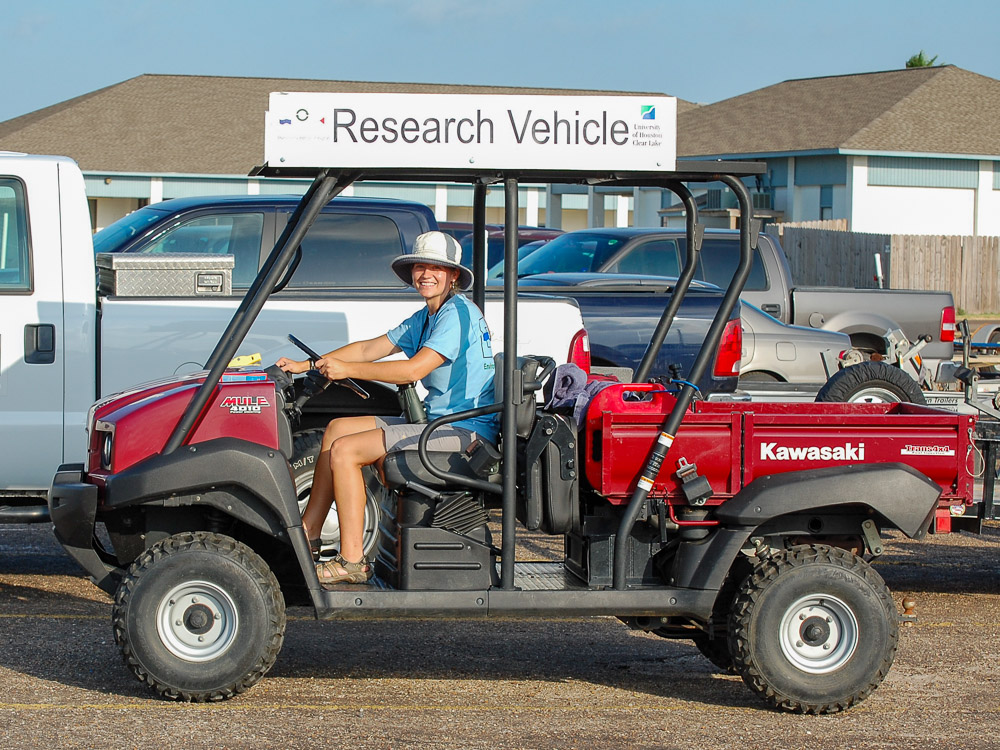
It was probably the very first day of my field research, which involved surveying many miles of beach across Galveston and Follets Island on an ATV with a large sign on it that read "Research Vehicle." I was with my research advisor, Dr. George Guillen, and we had barely driven a mile before the public flagged us down, asking why there were so many dead fish on the beach. It turned out there was a small fish kill that day. It was the perfect introduction to how unpredictable the beach is, and you never know what you'll find on the shore.
Since graduating from UHCL, how has your career evolved?
For the first 10 years of my career, I applied my coastal bird conservation thesis research directly to my work. Based in Galveston, I worked with local non-profit organizations to protect and monitor nesting, migrating, and wintering shorebirds and beach-nesting birds along the Texas coast. I also engaged with and educated the public, and I worked with local municipalities and land managers to better protect beach habitats year-round.
After a decade on the beach, I decided it was time to beat the heat and migrate north to a cooler climate. I now work as a wildlife biologist for a National Forest, where I help manage and protect threatened, endangered, and sensitive wildlife species, such as the northern spotted owl, and restore their habitats on National Forest lands. I’m still focused on species and habitat conservation, and I love it.
What's the coolest wildlife encounter you've had?
One of my most memorable wildlife encounters happened in Costa Rica in November 2017. A few weeks before traveling there for a shorebird conference, a Costa Rican bird guide notified me that he had observed a Wilson’s Plover I had banded as a nesting bird in Galveston, Texas. When I arrived, I hired him to take me to the exact spot where he had seen “my” bird.
I never found that particular plover, but I did spot another banded Wilson’s Plover that a colleague had banded in Louisiana. Even though it wasn’t the bird I had hoped to see, the experience still felt full circle. It gave me a rare chance to see the nonbreeding habitat these vulnerable birds depend on farther south for much of their annual life cycle. Seeing that bigger picture made the encounter especially meaningful.
What advice would you give UHCL students hoping to build a career in wildlife or habitat conservation?
Start building your resume as early as possible. Get involved and meet people. Volunteer with different conservation agencies, nonprofits, and organizations. Attend local meetings and presentations. Apply for internships or summer jobs in conservation.
What helped me get my foot in the door were a few volunteer opportunities that introduced me to people and new opportunities. They helped me build my resume and form lasting connections.
Any closing thoughts you'd like to share?
There are many directions you can take with a degree in environmental science. Follow what interests you most and see where it takes you. It may open the door to opportunities you weren’t expecting.
Contact
-
Environmental Institute of Houston
Phone: 281-283-3950
Email: eih@uhcl.eduNorth Office Annex
2700 Bay Area Blvd, Box 540
Houston, TX 77058-1002

